Introduction to Warranty

The Warranty module helps your company manage warranty issues, defects, and concerns reported after possession. It provides a single place to receive warranty requests, communicate, and track each issue through completion.
The Warranty module contains all the functionality needed to:
- Centralize warranty requests in one place.
- Review new homeowner submissions and decide whether action is required.
- Create new warranty requests from emails when appropriate.
- Assign work to the correct coordinator.
- Track requests by status, priority, age, coordinator, and escalation flag.
- Use dashboard queues to monitor active workloads.
What is a Warranty Request?
A warranty request is initiated when a homeowner (or authorised agent) reports an issue that may be covered under their home warranty. The request acts as the main record for tracking the issue from first review through closure.
A warranty request typically includes:
- A description of the issue provided by the requester.
- Photos or supporting details submitted by email or notes provided by the requester.
- The assigned coordinator for follow-up.
- Status changes as the issues are reviewed, assigned, resolved, and closed.
- Deficiencies and Work Orders related to the request.
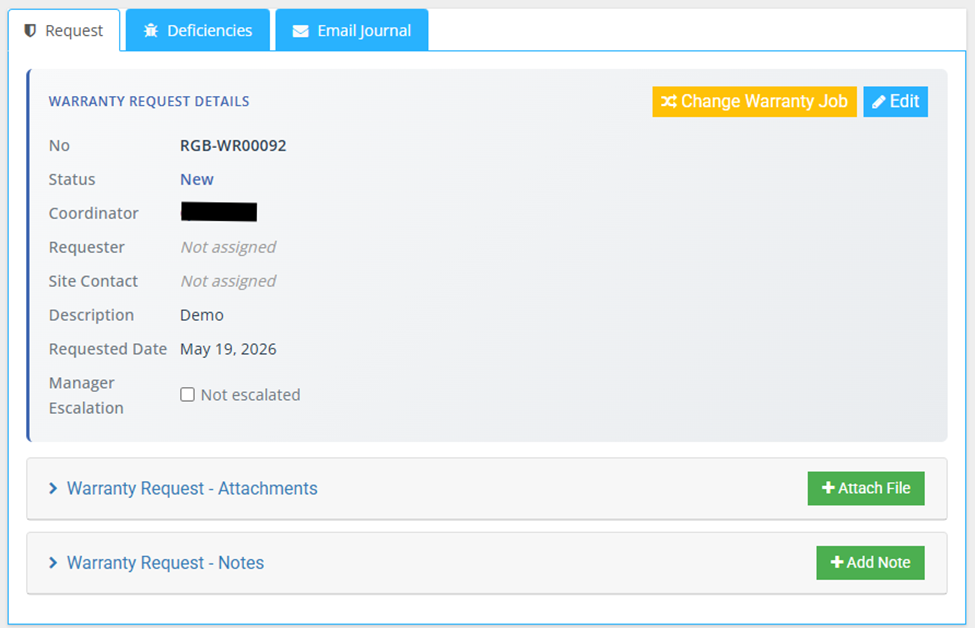
A request remains open until the warranty issue has been addressed and closed by a Warranty Coordinator or Warranty Manager.
Warranty Request Lifecycle
The Warranty module is designed to support the full lifecycle of a warranty request, from initial review through to completion. While workflows may vary across organizations, requests typically move through the following stages:

- Review and Triage - Understand the issue and determine how it should be handled.
- Create - Record the request in BuildBase for tracking and resolution.
- Manage - Update the request, track progress, and coordinate work, including deficiencies and work orders.
- Close - Complete the request once all work has been resolved.
This structure reflects how BuildBase is organized and helps ensure that requests are clearly understood, properly tracked, and resolved efficiently.